Zero Defect Ceramic and Metalware Sourcing India
Overcoming Quality Variance and Freight Damage in High-Volume Ceramic and Metalware Importing

The Hidden Cost of Defects in Global Procurement
For procurement directors responsible for importing ceramic and metalware collections at scale, success is rarely measured by negotiated pricing alone.
The true measure of sourcing excellence is consistency.
A shipment that arrives with chipped ceramics, scratched finishes, dimensional inconsistencies, unstable glazing, oxidation issues, or undocumented production deviations can quickly erase anticipated margins. Beyond replacement costs, defects generate chargebacks, customer dissatisfaction, warehouse inefficiencies, delayed launches, and reputational damage.
For enterprise buyers, the financial impact compounds rapidly.
A 2% defect rate across a multi-container shipment may translate into thousands of unusable units, strained retailer relationships, and weeks of operational disruption.
This is why sophisticated procurement teams increasingly prioritize risk mitigation over short-term unit cost advantages.
The modern sourcing mandate is straightforward:
Can your supplier deliver exactly what was approved, at scale, without surprises?
At Vahatt.in, zero-defect execution is not an aspiration. It is an operational framework built through disciplined quality systems, statistically controlled inspection methodologies, independent verification, and freight protection engineered specifically for international transportation environments.
For buyers managing import programs exceeding USD $50,000 in Minimum Order Values (MOVs), this approach provides confidence where uncertainty traditionally exists.
Why Quality Variance Remains the Greatest Threat to Import Profitability
Ceramic and metalware categories are uniquely vulnerable to inconsistency.
Unlike highly standardized industrial commodities, artisan-driven products involve numerous variables throughout production.
Ceramic collections may experience:
- Glaze inconsistencies
- Shade variation
- Surface pinholes
- Hairline cracks
- Warping
- Dimensional deviations
Metalware products can encounter:
- Uneven finishes
- Weld inconsistencies
- Oxidation concerns
- Weight variances
- Surface scratches
- Structural instability
When production volumes increase, these risks multiply.
Without disciplined quality controls, minor process deviations escalate into large-scale commercial losses.
The challenge intensifies when buyers source through intermediaries lacking direct factory oversight.
Vahatt.in addresses this vulnerability by functioning as a direct-to-factory export partner supported by structured quality governance.
Acceptable Quality Limits (AQL 2.5): Statistical Discipline in Procurement
Quality should never rely on subjective interpretation.
Enterprise procurement requires measurable standards.
This is where Acceptable Quality Limits (AQL) become essential.
What Is AQL 2.5?
AQL establishes a statistically valid inspection methodology used globally across manufacturing industries.
Under an AQL 2.5 framework:
- Randomized units are selected from production batches.
- Inspection quantities are determined using internationally recognized sampling standards.
- Critical defects are assessed against predetermined thresholds.
- Pass or fail outcomes are documented objectively.
This system provides consistency across production cycles.
Why Procurement Directors Prefer AQL Systems
AQL inspection methodologies offer several advantages:
- Reduced subjectivity
- Predictable acceptance criteria
- Documented inspection outcomes
- Improved supplier accountability
- Scalable quality governance
For high-volume imports, this statistical discipline becomes indispensable.
At Vahatt.in, AQL 2.5 inspection principles support our broader zero-defect philosophy.
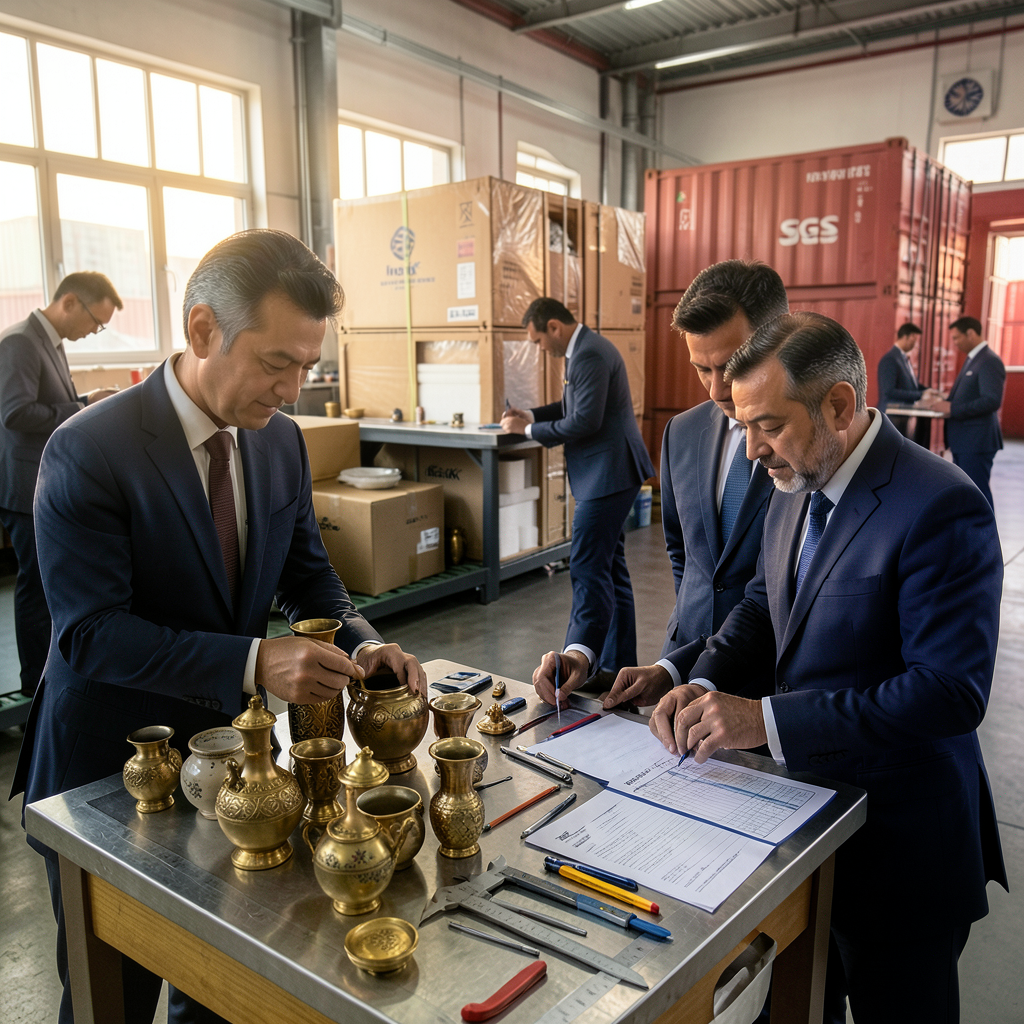
Zero-Defect Philosophy: Preventing Errors Before They Multiply
Many suppliers attempt to identify defects only after production is complete.
This reactive approach is costly.
Vahatt.in emphasizes defect prevention.
Golden Sample Benchmarking
Approved prototypes establish measurable standards covering:
- Dimensions
- Weight specifications
- Surface finishes
- Color tolerances
- Functional requirements
- Packaging standards
No production proceeds without documented approval.
Mid-Production Verification
Inspections during production identify deviations early enough for corrective action.
Final Inspection Controls
Completed batches undergo structured evaluation before cargo release.
This multi-stage methodology reduces downstream failures while protecting buyer interests.
Independent Third-Party Verification: Building Institutional Confidence
Even the strongest internal systems benefit from external validation.
International buyers increasingly request independent inspections before shipment release.
Vahatt.in fully cooperates with globally recognized inspection organizations.
SGS Inspection Support
Independent inspectors may review:
- Product conformity
- Quantity verification
- Packaging standards
- Labeling accuracy
- Shipment readiness
Intertek Verification
Third-party assessments provide additional assurance regarding production outcomes.
Benefits of Independent Oversight
External inspections help:
- Strengthen procurement confidence
- Reduce supplier disputes
- Improve retailer acceptance
- Enhance governance documentation
- Support institutional procurement policies
For enterprise buyers, transparency often matters as much as quality itself.
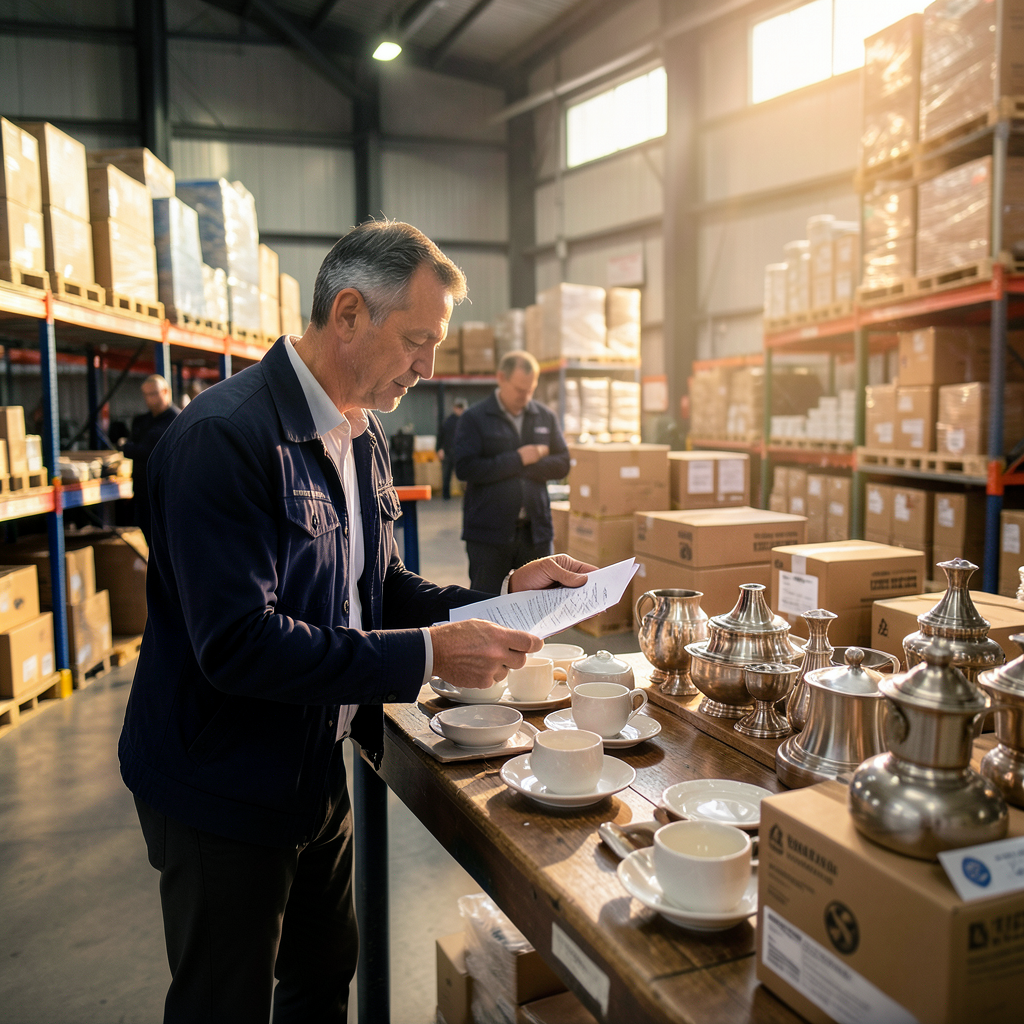
Freight Damage: The Overlooked Threat to Profitability
Quality failures do not occur exclusively within factories.
Many losses occur during transportation.
Ocean freight introduces substantial mechanical stress through:
- Vibration
- Compression
- Stacking pressure
- Humidity fluctuations
- Port handling
- Long-duration transit cycles
Ceramics are particularly vulnerable.
Metalware, while durable, remains susceptible to scratching, denting, and finish degradation.
Consequently, logistics engineering becomes an extension of quality assurance.
Proprietary Shatter-Proof Packaging Systems
Packaging should not be treated as an afterthought.
It is a strategic risk-management investment.
Vahatt.in employs category-specific protective methodologies designed for international freight environments.
Multi-Layer Impact Protection
Ceramic products utilize layered cushioning systems engineered to absorb mechanical shocks.
Reinforced Dividers
Structural partitions reduce product-to-product contact.
Compression Resistance
Heavy-duty export cartons improve stacking performance.
Surface Protection
Metalware receives specialized wrapping systems designed to minimize abrasion.
Moisture Mitigation
Humidity-control measures help preserve packaging integrity and product condition during extended ocean transit.
The objective is simple:
Products should arrive exactly as approved.

Structured Multi-Container Logistics Execution
Scaling successfully requires more than filling containers.
It requires disciplined coordination.
Container Optimization
Strategic loading plans maximize protection while improving freight efficiency.
Pallet Configuration
Balanced weight distribution minimizes transit movement.
Documentation Controls
Export documentation accuracy reduces customs disruptions.
Shipment Visibility
Coordinated communication ensures procurement teams remain informed throughout transit.
Ocean Freight Planning
Scheduling strategies support timely deliveries while minimizing operational surprises.
These systems become increasingly important as shipment volumes expand.
Operational Blueprint: How Vahatt.in Delivers Zero-Defect Results
Enterprise buyers require repeatable processes.
Vahatt.in follows a structured execution framework designed for large-volume procurement programs.
Phase 1: Discovery and Technical Alignment
We evaluate:
- Product specifications
- Commercial objectives
- Packaging expectations
- Inspection requirements
- Forecasted volumes
Phase 2: Prototype Development
Samples are produced according to buyer specifications.
Phase 3: Golden Sample Approval
Formal sign-off establishes the production benchmark.
Phase 4: Compliance Review
Documentation requirements and buyer-specific protocols are validated.
Phase 5: Controlled Manufacturing
Production proceeds under documented specifications.
Phase 6: Double-Stage Internal Audits
Every order undergoes:
Mid-Production Audit
Focused on identifying emerging inconsistencies.
Final Pre-Shipment Audit
Focused on confirming shipment readiness.
Phase 7: Independent Third-Party Inspections
SGS or Intertek inspections are coordinated upon buyer request prior to port loading.
Phase 8: Packaging Validation
Protective systems are reviewed against product-specific transit risks.
Phase 9: Container Release
Only approved shipments proceed to export execution.
This framework transforms sourcing from a transactional exercise into a controlled operational process.
ust have a look our Other Articles: Vahatt: Basmati Rice 1121
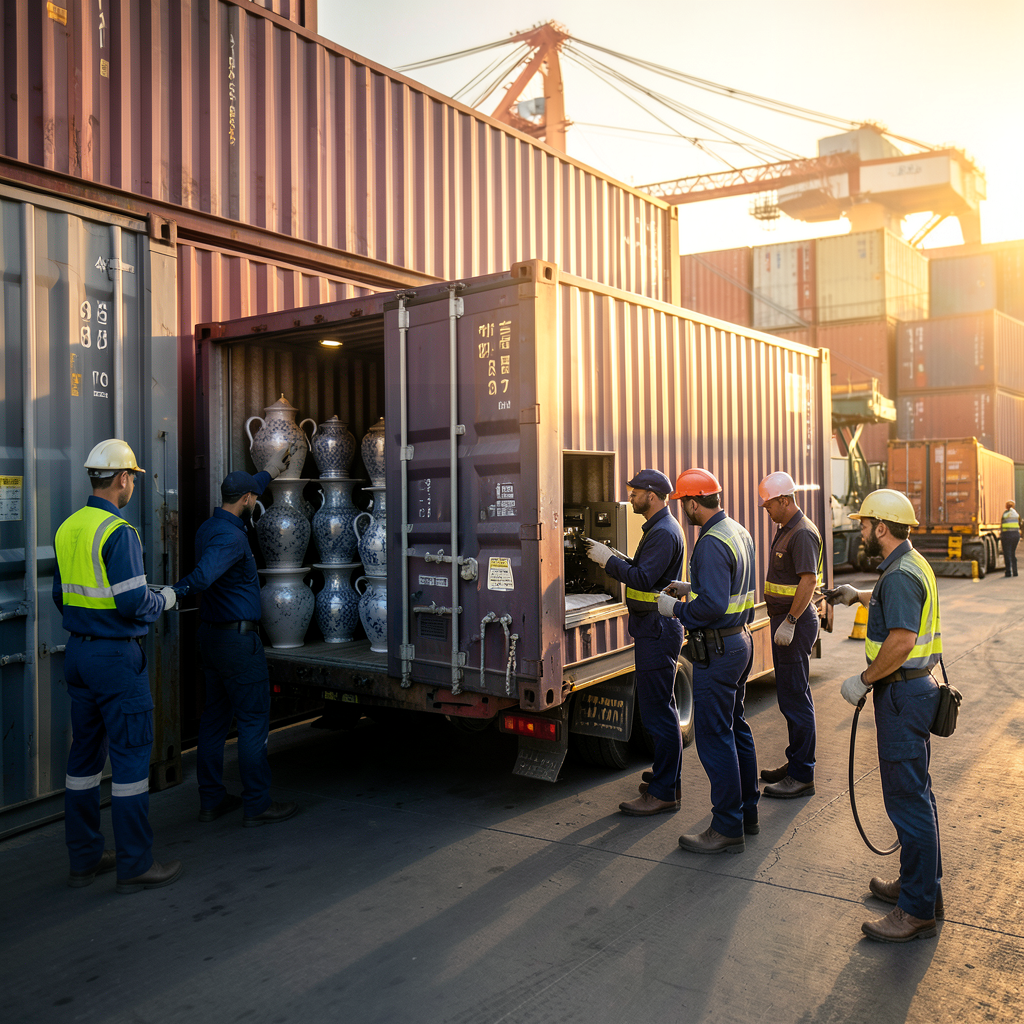
Compliance and Ethical Manufacturing Remain Non-Negotiable
Operational excellence must coexist with responsible business practices.
Vahatt.in maintains alignment with international expectations surrounding:
ESG Commitments
Environmental, Social, and Governance considerations increasingly influence procurement decisions.
Fair-Wage Principles
Responsible workforce engagement contributes to supply continuity and ethical integrity.
Documentation Discipline
Accurate records support transparency and audit readiness.
Global Trade Standards
Export execution follows internationally recognized commercial practices.
For procurement leaders, these factors increasingly influence supplier selection.
Transparent Financial Structures Reduce Commercial Risk
International trade depends upon trust.
Vahatt.in supports procurement confidence through transparent commercial frameworks.
Irrevocable Letters of Credit (L/C at Sight)
Institutional payment mechanisms enhance security for both parties.
Structured Milestone Payments
Commercial expectations remain clearly documented.
Golden Sample Sign-Off Protocols
Approval checkpoints reduce ambiguity.
Open Communication Practices
Regular reporting improves visibility throughout execution.
These safeguards strengthen long-term sourcing partnerships.
Procurement Confidence Begins with Operational Discipline
Global procurement leaders understand that the true cost of importing ceramics and metalware extends beyond product pricing.
The hidden expenses of defects, freight damage, delayed launches, and supplier disputes frequently outweigh marginal savings secured during negotiation.
As retailers and institutional buyers demand greater consistency, transparency, and accountability, sourcing partners must evolve beyond simple manufacturing capacity.
They must demonstrate disciplined execution.
Vahatt.in serves as a trusted direct-to-factory export partner capable of supporting enterprise procurement programs requiring precision, predictability, and scale.
Through AQL 2.5 inspection methodologies, Golden Sample benchmarking, zero-defect production philosophies, rigid double-stage internal audits, independent SGS and Intertek inspection cooperation, proprietary shatter-proof packaging systems, moisture-control strategies, and structured multi-container freight coordination, we help international buyers minimize risk while protecting profitability.
We are actively open to international sourcing contracts with a baseline Minimum Order Value (MOV) of USD $50,000 and possess the operational capability required to support medium and large-scale import programs across Western markets.
Qualified buyers are invited to connect with the Vahatt.in export desk to request our capabilities brief, quality assurance framework, and logistics execution roadmap.